Thursday, December 25, 2014

Robotic Arms


Double Amputee Becomes First to Control Two Robotic Arms with Only His Mind

Baugh, as Johns Hopkins’ Applied Physics Laboratory reports, is the first “bilateral shoulder-level amputee” to wear and control two modular prosthetic limbs at the same time. The technology has been in development for more than a decade. It was funded by the Defense Advanced Research Projects Agency and was tested on Baugh as part of an experimental program run at the Johns Hopkins Applied Physics Laboratory.
Though his progress is groundbreaking, accomplishing this medical first was no easy feat. Baugh first had to undergo an intense surgery — performed by the institute’s medical director, Albert Chi — that rearranged (in medical terms, “reinnervated”) the nerves in his chest.

“I remember when I first came out from under it, the pain — I don’t even remember the original being that much excruciating pain,” Baugh said in a video released by the university. 

Sony Xperia Z3 scores a record battery life

All bow to the new endurance king: Sony Xperia Z3 scores a record battery life for its category

All bow to the new endurance king: Sony Xperia Z3 scores a record battery life for its category
We are not going to mince words here - Sony is the current king of battery life when it comes to brand-name smartphones. We did our grueling battery benchmark on the Xperia Z3 over the weekend, and it broke all records in its respective category, just as we suspected it would do, given Sony's consistent performance in that department this year.

The phone lasted for nearly nine and a half hours of screen-on time when we ran our tasking battery benchmark, putting it comfortably ahead of any other flagship big-screen phone or phablet we've tested at the moment. 


As mentioned, this is more than any other flagship we've measured so far - phone or phablet - and even more than the Ascend Mate7, which comes equipped with a whopping 4100 mAh juicer, while the Z3 has an "only" 3100 mAh piece in a 7.3mm thin waterproof body. 

The Z3 battery endurance is also better than the one of the Z2, which already has a great battery life, so kudos to Sony here - it managed to squeeze much more life out of a tad smaller battery, compared to the Z2, and make a truly "two-day battery". The charging time, on the other hand, is much longer than the average, at close to four hours with the paltry stock 850 mA charger. 

If you think that what Sony did is by accident, then a simple look at our top ten endurance champs will tell you that this is not the case. Sony phones are currently occupying six of the top ten slots in our battery benchmark ranking, and these range from low-ends, like the Xperia C, through midrangers like the slim T3, all the way to the Xperia Z3 flagship. The "culprit" must be Sony's displays, which might not be the best out there when it comes to color representation and viewing angles, but are apparently using an extremely frugal technology, and screens are the pesky components with the highest battery consumption in our smartphones, so kudos to Sony here.

Battery life

We measure battery life by running a custom web-script, designed to replicate the power consumption of typical real-life usage. All devices that go through the test have their displays set at 200-nit brightness.

hours
Higher is better
  
Sony Xperia Z3
9h 29 min (Excellent)
Huawei Ascend Mate7
9h 3 min (Excellent)
Sony Xperia Z2
8h 10 min (Excellent)
Samsung Galaxy S5
7h 38 min (Good)
HTC One (M8)
7h 12 min (Good)
Apple iPhone 6 Plus
6h 32 min (Average)
LG G3
6h 14 min (Average)
Samsung Galaxy Note 3
6h 8 min (Average)
Motorola Moto X (2014)
5h 45 min (Average)
Apple iPhone 6
5h 22 min (Poor)
Apple iPhone 5s
5h 2 min (Poor)
Google Nexus 5
4h 50 min (Poor)

The Pirate Bay Back End

The Pirate Bay Back End “Hydra” to go Live on January 1, 2015

of providing a torrent search following the raid of The Pirate Bay on December 9th. While users were happy to see this at the time, it still didn't make up for the fact that The Pirate Bay was shut down and there had been no word on when or if it would return.

On the site the isoHunt team states, "As you probably know the beloved Pirate Bay website is gone for now. It’ll be missed. It’ll be remembered as the pilgrim of freedom and possibilities on the web. It’s a symbol of liberty for a generation of internet users.

In its honor we are making the oldpiratebay.org search. We, the isohunt.to team, copied the database of Pirate Bay in order to save it for generations of users. Nothing will be forgotten. Keep on believing, keep on sharing
."

They not only created a search, but have been encouraging anyone who wants to, to create their own copy of The Pirate Bay. Why would so many people want to do that? Because it’s all part of the plan for the return of The Pirate Bay, working in collaboration with isoHunt. Our sources tell us that "hydra" is a code name for the back end of The Pirate Bay, and that “hydra” plans to go live on January 1, 2015.

In Greek mythology, hydra is a serpent with many heads, hence the image that appears on the .se site right now. The structured plan by The Pirate Bay team is to have so many fronts (fake copies) of the Pirate Bay, that it would be nearly impossible for the authorities to get to the real Pirate Bay which will be hidden behind the servers and will be where the magnets, databases and users actually are. User access will be though the copies of TPB, to get to the real Pirate Bay.

Our sources provided us with a copy of the structured layout for the return of TPB, and also tell us that The Pirate Bay will not be returning on the “thepiratebay.se” domain, but plans to return on a new domain, possibly using .xyz. Tiamo, who owns thepiratebay.se domain, is currently in jail.

This is good news for the thousands of Pirate Bay users who have been wondering when their favorite torrent site would be back.

Stay tuned for more news as it becomes available.

Sony Hack

The Case for N. Korea’s Role in Sony Hack


There are still many unanswered questions about the recent attack on Sony Pictures Entertainment, such as how the attackers broke in, how long they were inside Sony’s network, whether they had inside help, and how the attackers managed to steal terabytes of data without notice. To date, a sizable number of readers remain unconvinced about the one conclusion that many security experts and the U.S. government now agree upon: That North Korea was to blame. This post examines some compelling evidence from past such attacks that has helped inform that conclusion.


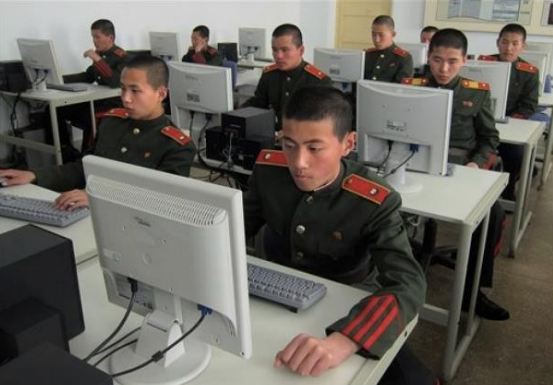
An image from HP, captioned "North Korean students training for cyberwar."

An image from HP, captioned “North Korean students training for cyberwar.”
\
The last time the world saw an attack like the one that slammed SPE was on March 20, 2013, when computer networks running three major South Korean banks and two of the country’s largest television broadcasters were hit with crippling attacks that knocked them offline and left many South Koreans unable to withdraw money from ATMs. The attacks came as American and South Korean military forces were conducting joint exercises in the Korean Peninsula.

That attack relied in part on malware dubbed “Dark Seoul,” which was designed to overwrite the initial sections of an infected computer’s hard drive. The data wiping component used in the attack overwrote information on infected hard drives by repeating the words “hastati” or “principes,” depending on which version of the wiper malware was uploaded to the compromised host.


Both of those terms reference the military classes of ancient Rome: “hastati” were the younger, poorer soldiers typically on the front lines; the “principes” referred to more hardened, seasoned soldiers. According to a detailed white paper from McAfee, the attackers left a calling card a day after the attacks in the form of a web pop-up message claiming that the NewRomanic Cyber Army Team was responsible and had leaked private information from several banks and media companies and destroyed data on a large number of machines.

Thursday, December 11, 2014

Nexus X to boost Google stock


All eyes have been on Apple recently as they finally unveiled their long awaited iPhone 6 and Apple Watch. But now that the Apple frenzy is winding down, it’s time to talk about the next big event in mobile tech – the upcoming release of a new Google Nexus phone.
google phone

Based on the latest (leaked) photos of the new phone (which will probably be called the Nexus X), it seems that the next generation of Google phones might be moving further into the spotlight and beginning to generate its own buzz. According to the latest rumors, the upcoming phone, which apparently will be manufactured by Motorola, will have a 5.2 inch display, a 2.0 GHz octa-core processor from MediaTek and a 13 mega pixel camera.
The $499.99 price tag clearly makes this one of Google’s more expensive phones and puts it that much closer, price-wise, to the coveted iPhone.
This impressive phone is sure to excite tech savvies and gadget “geeks”, but why should investors care about a Google phone, albeit a relatively impressive one? After all, the sales of the device itself are expected to make only a marginal difference in Google’s total revenue picture so why are investors excited?
Google wants Apple’s users
Although Google’s newest phone isn’t going to be released until sometime around Halloween, with specs that could possibly shadow those of the new iPhone 6, the Nexus X will certainly be no ghost. But what investors are coming to realize is that the Nexus X is a tool that will allow Google to tap into the lucrative market of 800 million iTunes users, the majority of whom use their iPhone or other Apple products exclusively.
As seen below, Apple users statistically have more available income at their disposal and spend more money on apps, music, games or whatever else is available on their mobile devices. And this is what Google is really after; Google wants to get a piece of the crème de la crème pie, by enticing the big spenders to move into their Android ecosystem and spend dollars at Google Play rather than iTunes. This is where the big bucks come in and that is what is getting investors excited.
iphone vs android users
Charting the Targets
As illustrated above, what Google investors really care about is how this new Nexus X will rival iPhone to lure more Apple iTunes users to Google Play.  At the moment,  it seems that investors are indeed optimistic. The targets range from the strongly bullish, who target $750 a share, a 27% upside, to the more conservative bulls who eye $672, a 14% upside. But what is more interesting is that the bears foresee a downside risk of 3% which is, all in all, a rather moderate prediction and a signal that investors expect little downside risk.
goog_sept
Will the Nexus X deliver? Will Google get its hands on those lucrative iTunes users? Only time will tell, but when it does, analysts, it seems, may have already carved out the upside targets.